Buy merkata.eu ?
We are moving the project
merkata.eu .
Are you interested in purchasing the domain
merkata.eu ?
domain@kv-gmbh.de · 0541-91531010
Buy merkata.eu ?
How did the Social Market Economy come about?
The Social Market Economy was developed in post-World War II Germany as a response to the economic challenges faced by the country. It was influenced by the ideas of economists such as Walter Eucken and Ludwig Erhard, who sought to combine free market principles with social welfare policies. The goal was to create a system that promoted competition and efficiency while also ensuring social justice and a safety net for all citizens. The Social Market Economy was officially adopted as the economic model for West Germany in the 1950s and has since been credited with contributing to the country's economic success. **
What does the caricature show about the free market economy?
The caricature depicts a large, powerful corporation towering over smaller businesses, symbolizing the dominance of big businesses in a free market economy. It highlights the unequal distribution of power and resources in a free market system, where larger corporations often have a competitive advantage over smaller businesses. The caricature suggests that in a free market economy, there can be monopolistic tendencies and challenges for smaller businesses to compete on a level playing field. **


Similar search terms for Stila-All-About-The
Top-Angebote
Products related to Stila-All-About-The:
-
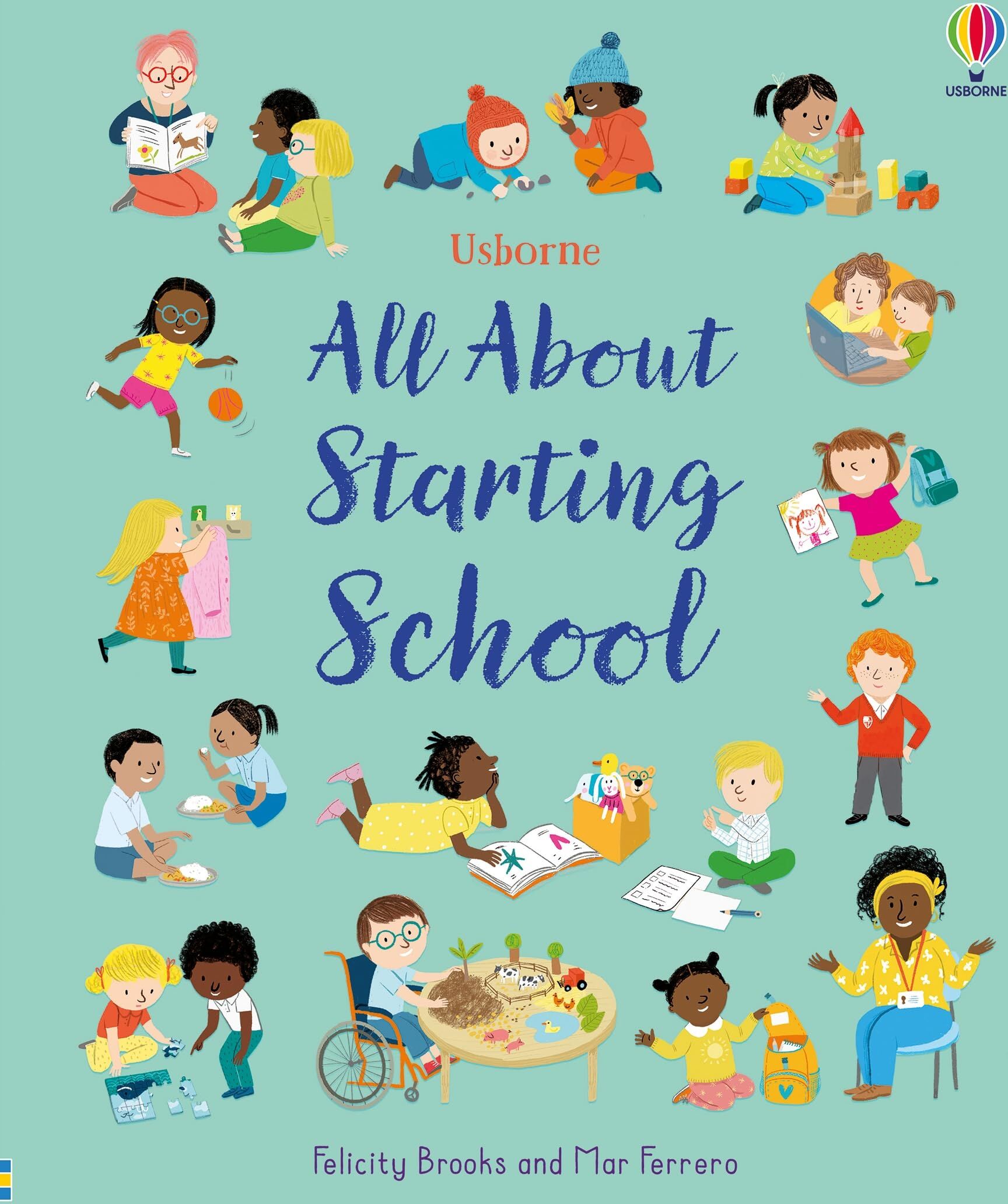
Usborne Publishing Ltd All About Starting School by Felicity Brooks (Usborne All About series)What is a school? Why do we have to go there? How will we get there? What do we need to take? Who will we meet and what will we do when we are there? These and many more questions are answered in this engaging and reassuring introduction to schools of all kinds. Children can find out about who works in a school, what happens during the school day and get tips on how to make friends. - Includes Quicklinks for further information and useful notes for grown-ups on helping prepare children for the big day. - Help build essential vocabulary - Encourages conversation about starting school - Supports early years curriculum Chapters in this book include: - What is school? - Why do you need to go to school? - Getting ready for school - Getting to school - What's in a classroom? - Who works at a school? - What will you do at school? - What else happens at school? - Lunchtime at school - Making friends - Going on a school trip - Different kinds of schools - How do you feel about school? - Some useful school words5,99 £*Shipping: 2,99 £Secure redirect to the provider
-
What does the cartoon show about the free market economy?
The cartoon depicts a race where some participants have a head start while others are left far behind. This illustrates the concept of inequality in a free market economy, where some individuals or groups have advantages that allow them to succeed more easily than others. It highlights how the free market can lead to unequal outcomes and opportunities, with those starting from a disadvantaged position struggling to catch up. Overall, the cartoon suggests that the free market economy can perpetuate and even exacerbate existing inequalities. **
-
How do I analyze a caricature about the social market economy?
When analyzing a caricature about the social market economy, it's important to first identify the key elements and symbols used in the image. Look for exaggerated features or symbols that represent different aspects of the social market economy, such as government intervention, competition, or social welfare. Consider the overall message or critique being conveyed by the caricature, and think about how it reflects the artist's perspective on the social market economy. Finally, consider the historical and cultural context in which the caricature was created, as this can provide valuable insight into the intended meaning of the image. **
-
Can someone help me analyze the cartoon about the social market economy?
Certainly! To analyze a cartoon about the social market economy, you can look for visual cues that represent key elements of this economic system, such as a balance between free market principles and social welfare policies. Pay attention to any symbols or characters that may represent capitalism, government intervention, or social programs. Additionally, consider the overall message or critique the cartoon is conveying about the social market economy, whether it is highlighting its benefits or pointing out its shortcomings. By examining these aspects, you can gain a deeper understanding of the cartoon's perspective on this economic model. **
-
Isn't capitalism, economic liberalism, and neoliberalism essentially the same thing, because to me it sounds like it's all about free market economy?
While capitalism, economic liberalism, and neoliberalism all emphasize the importance of free market economy, they are not exactly the same. Capitalism is an economic system where the means of production are privately owned and operated for profit. Economic liberalism is a political and economic ideology that advocates for minimal government intervention in the economy and emphasizes individual freedom and free markets. Neoliberalism, on the other hand, is a more recent form of economic liberalism that emphasizes deregulation, privatization, and free trade. While they share similarities, they also have distinct historical and ideological differences. **
What is the difference between online commerce and retail commerce?
Online commerce refers to the buying and selling of goods and services over the internet, while retail commerce refers to the traditional brick-and-mortar stores where customers can physically visit and make purchases. Online commerce offers the convenience of shopping from anywhere at any time, while retail commerce provides the opportunity for customers to see, touch, and try products before making a purchase. Online commerce often involves lower overhead costs and can reach a wider audience, while retail commerce provides a more personalized and immediate shopping experience. **
'All about female actors'
Female actors are talented performers who bring characters to life on stage, television, and film. They often face challenges such as gender inequality, ageism, and typecasting in the entertainment industry. Despite these obstacles, many female actors have achieved great success and recognition for their work, breaking barriers and inspiring future generations of women in the industry. Female actors play a crucial role in shaping the narratives and representation of women in media, using their platform to advocate for gender equality and diversity in the industry. **
Top-Angebote
Products related to Stila-All-About-The:
-
Stila All About The Blur Blurring & Smoothing PrimerAchieve gorgeously smooth, blurred makeup application with this soft-focus effect primer from Stila. This long-wear, sweat-proof and non-transfer primer replicate the look of bare skin to create a super smooth base for your makeup application. Key Ingredients: Agave Tequilana leaf extracts - soothe and smooth skin, and help reduce the appearance of wrinkles. Hyaluronic Acid - a skin conditioner that hydrates skin. Niacinamide - a form of B-3 vitamin that improves skin appearance and overall health and texture. The Results: 90% agreed primer provides a soft blur finish / soft-focus effect* 97% agreed primer feels lightweight under the foundation* 100% said primer feels comfortable under the foundation* 81% stated primer visibly blurs fine lines/wrinkles* 87% noticed primer prevents makeup from settling into creases* * Results observed in a customer perception survey. Ingredients: WATER/AQUA/EAU, BUTYLENE GLYCOL, PROPANEDIOL, DIMETHICONE CROSSPOLYMER, GLYCERIN, SODIUM ACRYLATES CROSSPOLYMER-2, SILICA, CAPRYLYL GLYCOL, ETHYLHEXYLGLYCERIN, MALTOSE, POTASSIUM HYDROXIDE, CARBOMER, DEXTRIN, NIACINAMIDE, TOCOPHERYL ACETATE, CAPRYLIC/CAPRIC TRIGLYCERIDE, AGAVE TEQUILANA LEAF EXTRACT, TRISODIUM ETHYLENEDIAMINE DISUCCINATE, PISUM SATIVUM (PEA) EXTRACT, SODIUM HYALURONATE, BENZYL ALCOHOL, TOCOPHEROL, CHENOPODIUM QUINOA SEED EXTRACT, SORBITAN TRIOLEATE, POTASSIUM SORBATE, SODIUM BENZOATE, ALUMINUM HYDROXIDE, ALUMINA, BARIUM SULFATE, APIUM GRAVEOLENS SEED EXTRACT, LINUM USITATISSIMUM (LINSEED) SEED OIL, SODIUM SULFATE, TITANIUM DIOXIDE (CI 77891), IRON OXIDES (CI 77491, CI 77492, CI 77499), RED 30 (CI 73360), RED 7 (CI 15850), RED 28 LAKE (CI 45410), YELLOW 5 LAKE (CI 19140), BLUE 1 LAKE (CI 42090).32,00 £*Shipping: 0,00 £Secure redirect to the provider
-
Routledge All About Autism: A Practical Guide for Secondary Teachers (All About SEND)All About Autism is an accessible and informative guide for secondary school teachers, designed to increase their knowledge and understanding of autism and enhance their toolkit with practical, adaptable strategies to support autistic learners in their care. The book initially explores key traits and terminology, debunks myths and misconceptions, and shines a light on the strengths and abilities of autistic learners. It then introduces readers to a range of easy-to-implement ideas for practice and concrete solutions to provide further support, all with the child at the heart. All About Autism includes: Practical strategies tailored to the secondary key stages with current research broken down into easily digestible chunks A focus on adaptive teaching and how to implement key strategies in different subject areas Guidance on a range of topics, from supporting students with mental health and anxiety to managing group work, class work, writing difficulties, homework and exams Strategies to support an understanding of puberty, relationships and sex education Approaches to foster autistic pride and to promote positive attitudes to diversity in all its forms Easy to dip in and out of chapters with signposting to further research, resources and support Taking a celebratory approach, the guide focuses on difference rather than deficit and weaves together the voices of autistic learners and parents alongside practical examples of what high-quality and adapted teaching should look like. It will be essential reading for all secondary school educators, SENCOs and parents who are supporting autistic learners aged 11-16.10,99 £*Shipping: 2,99 £Secure redirect to the provider
-
Usborne Publishing Ltd All About Starting School by Felicity Brooks (Usborne All About series)What is a school? Why do we have to go there? How will we get there? What do we need to take? Who will we meet and what will we do when we are there? These and many more questions are answered in this engaging and reassuring introduction to schools of all kinds. Children can find out about who works in a school, what happens during the school day and get tips on how to make friends. - Includes Quicklinks for further information and useful notes for grown-ups on helping prepare children for the big day. - Help build essential vocabulary - Encourages conversation about starting school - Supports early years curriculum Chapters in this book include: - What is school? - Why do you need to go to school? - Getting ready for school - Getting to school - What's in a classroom? - Who works at a school? - What will you do at school? - What else happens at school? - Lunchtime at school - Making friends - Going on a school trip - Different kinds of schools - How do you feel about school? - Some useful school words5,99 £*Shipping: 2,99 £Secure redirect to the provider
-
How did the Social Market Economy come about?
The Social Market Economy was developed in post-World War II Germany as a response to the economic challenges faced by the country. It was influenced by the ideas of economists such as Walter Eucken and Ludwig Erhard, who sought to combine free market principles with social welfare policies. The goal was to create a system that promoted competition and efficiency while also ensuring social justice and a safety net for all citizens. The Social Market Economy was officially adopted as the economic model for West Germany in the 1950s and has since been credited with contributing to the country's economic success. **
-
What does the caricature show about the free market economy?
The caricature depicts a large, powerful corporation towering over smaller businesses, symbolizing the dominance of big businesses in a free market economy. It highlights the unequal distribution of power and resources in a free market system, where larger corporations often have a competitive advantage over smaller businesses. The caricature suggests that in a free market economy, there can be monopolistic tendencies and challenges for smaller businesses to compete on a level playing field. **
-
What does the cartoon show about the free market economy?
The cartoon depicts a race where some participants have a head start while others are left far behind. This illustrates the concept of inequality in a free market economy, where some individuals or groups have advantages that allow them to succeed more easily than others. It highlights how the free market can lead to unequal outcomes and opportunities, with those starting from a disadvantaged position struggling to catch up. Overall, the cartoon suggests that the free market economy can perpetuate and even exacerbate existing inequalities. **
-
How do I analyze a caricature about the social market economy?
When analyzing a caricature about the social market economy, it's important to first identify the key elements and symbols used in the image. Look for exaggerated features or symbols that represent different aspects of the social market economy, such as government intervention, competition, or social welfare. Consider the overall message or critique being conveyed by the caricature, and think about how it reflects the artist's perspective on the social market economy. Finally, consider the historical and cultural context in which the caricature was created, as this can provide valuable insight into the intended meaning of the image. **
Similar search terms for Stila-All-About-The
-
Can someone help me analyze the cartoon about the social market economy?
Certainly! To analyze a cartoon about the social market economy, you can look for visual cues that represent key elements of this economic system, such as a balance between free market principles and social welfare policies. Pay attention to any symbols or characters that may represent capitalism, government intervention, or social programs. Additionally, consider the overall message or critique the cartoon is conveying about the social market economy, whether it is highlighting its benefits or pointing out its shortcomings. By examining these aspects, you can gain a deeper understanding of the cartoon's perspective on this economic model. **
-
Isn't capitalism, economic liberalism, and neoliberalism essentially the same thing, because to me it sounds like it's all about free market economy?
While capitalism, economic liberalism, and neoliberalism all emphasize the importance of free market economy, they are not exactly the same. Capitalism is an economic system where the means of production are privately owned and operated for profit. Economic liberalism is a political and economic ideology that advocates for minimal government intervention in the economy and emphasizes individual freedom and free markets. Neoliberalism, on the other hand, is a more recent form of economic liberalism that emphasizes deregulation, privatization, and free trade. While they share similarities, they also have distinct historical and ideological differences. **
-
What is the difference between online commerce and retail commerce?
Online commerce refers to the buying and selling of goods and services over the internet, while retail commerce refers to the traditional brick-and-mortar stores where customers can physically visit and make purchases. Online commerce offers the convenience of shopping from anywhere at any time, while retail commerce provides the opportunity for customers to see, touch, and try products before making a purchase. Online commerce often involves lower overhead costs and can reach a wider audience, while retail commerce provides a more personalized and immediate shopping experience. **
-
'All about female actors'
Female actors are talented performers who bring characters to life on stage, television, and film. They often face challenges such as gender inequality, ageism, and typecasting in the entertainment industry. Despite these obstacles, many female actors have achieved great success and recognition for their work, breaking barriers and inspiring future generations of women in the industry. Female actors play a crucial role in shaping the narratives and representation of women in media, using their platform to advocate for gender equality and diversity in the industry. **
* All prices are inclusive of VAT and, if applicable, plus shipping costs. The offer information is based on the details provided by the respective shop and is updated through automated processes. Real-time updates do not occur, so deviations can occur in individual cases. ** Note: Parts of this content were created by AI.